Digital payments in many African markets are not designed for the realities of small businesses.
Merchants often face:
High upfront costs for POS hardware
Complex onboarding flows requiring technical knowledge
Poor connectivity affecting transaction reliability
Fragmented experiences across payment providers
Low trust in contactless transactions
Many merchants operate in environments where internet connectivity is inconsistent and devices are often low-end Android phones. Existing tools assume reliable connectivity, newer devices, and high digital literacy — assumptions that exclude a large segment of the market.
We needed to design a payment experience that worked within real-world constraints, not ideal conditions.

How might we design a hardware-free payment experience that:
works on low-end smartphones
feels trustworthy for first-time digital payment users
reduces onboarding friction
enables fast transactions in busy environments
scales across merchants, consumers, and partners
builds confidence in contactless payments
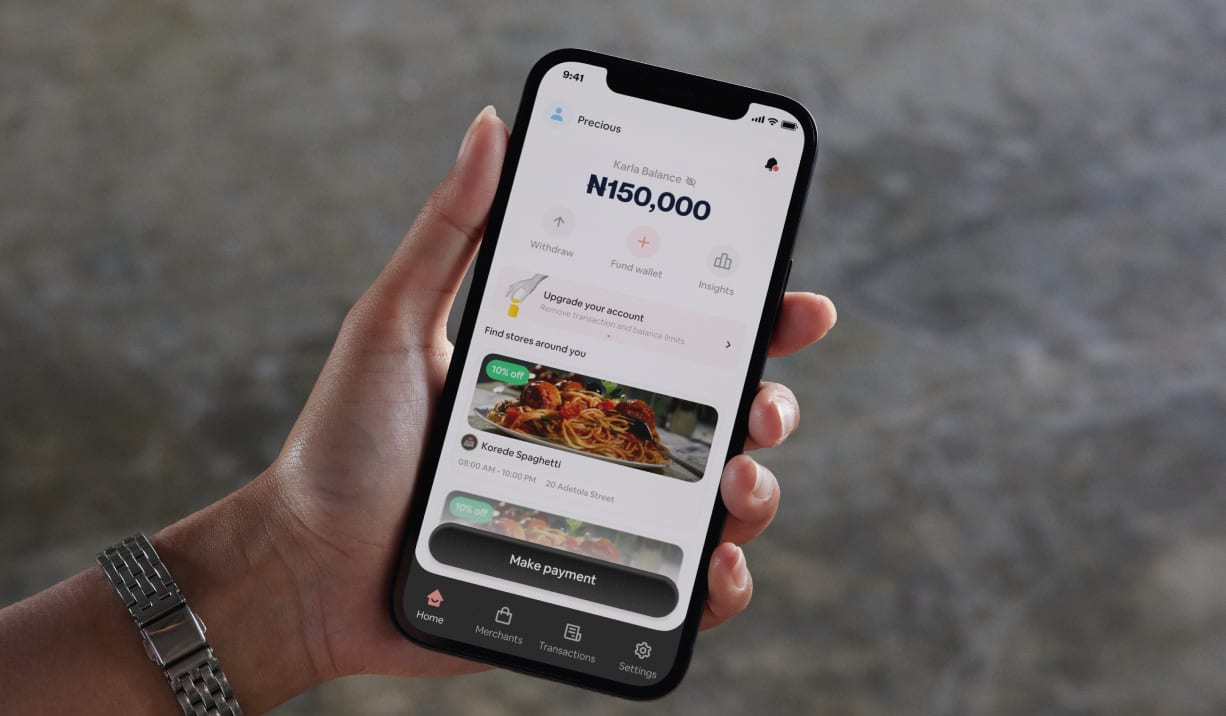
These principles guided every decision:
Clarity builds trust
Users need strong feedback signals when money moves.Speed reduces doubt
Transactions should feel immediate and predictable.Familiar patterns reduce the learning curve
Design should feel intuitive even for first-time users.Hardware should not be a barrier
Smartphones should function as POS devices.Systems thinking enables scale
The design system should support future payment methods.
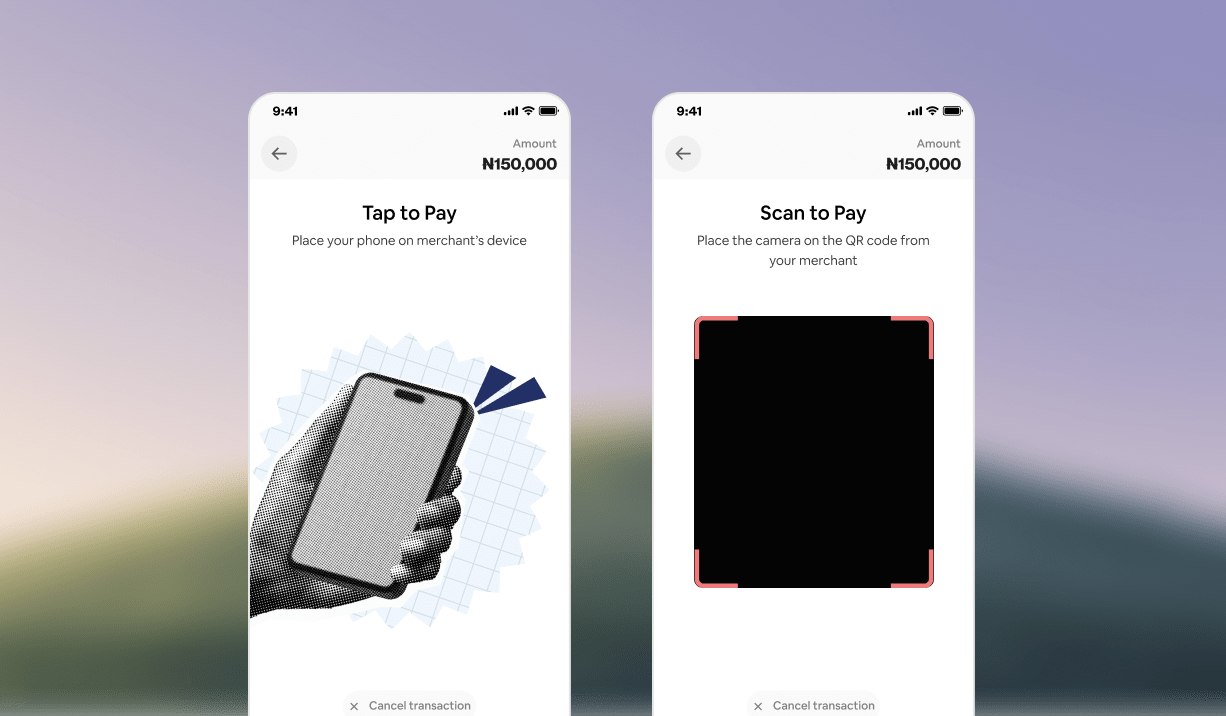
We conducted interviews with merchants and customers to understand how payments happen in everyday contexts.
Many merchants were transitioning from fully cash-based systems and had concerns about:
whether tap-to-pay would work reliably
how quickly they could receive funds
whether customers would trust the experience
how difficult the setup would be
One recurring theme was hesitation toward digital tools perceived as complex or unreliable.
Persona: Amina — Market Trader
Runs a small produce stall
Uses a basic Android device
Has never used a POS system
Prefers tools that work offline
Wants faster checkout without handling cash
Her success metric is simple: complete transactions quickly and confidently during busy hours.
Insights from user interviews directly influenced onboarding simplification and transaction feedback design.
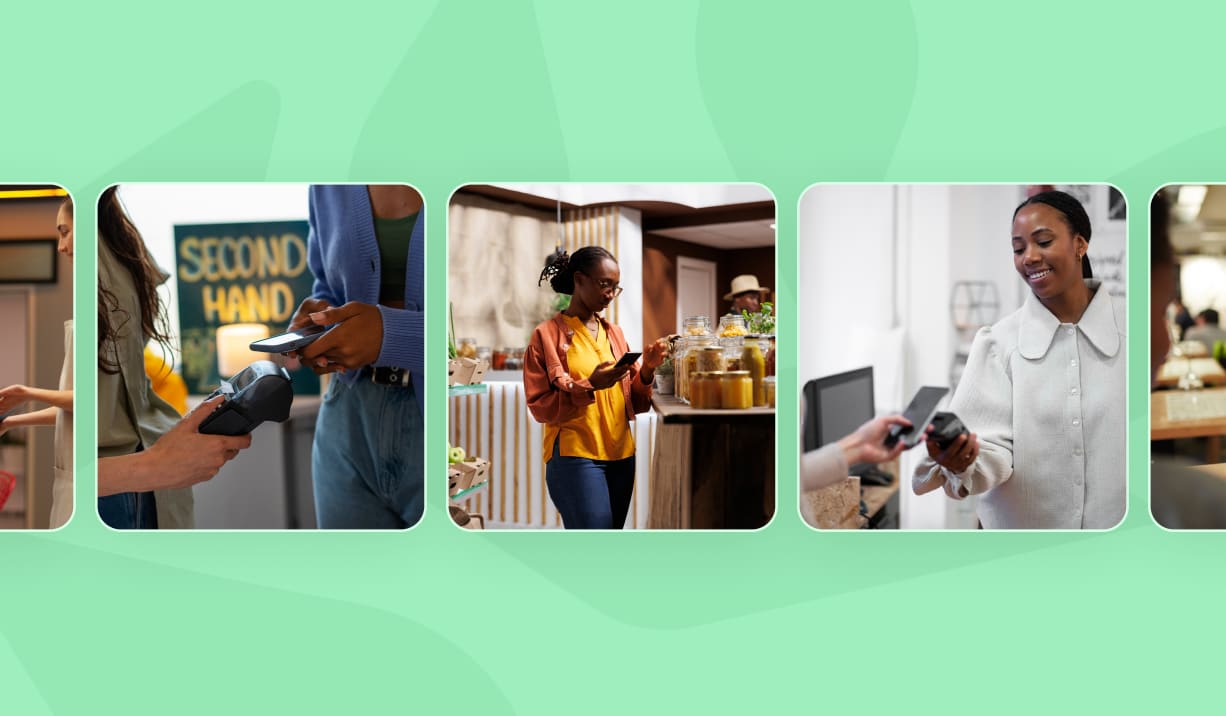
We prioritised the most frequent merchant actions:
Accept payment
View transaction history
Send receipts
Monitor account activity
Less frequent tasks, such as PIN updates and notification settings, were grouped under account-level navigation.
Core navigation structure
Bottom navigation:
Home
Transactions
Summary
Settings
Offline behaviour was considered part of the system design rather than an edge case.
Transactions could queue locally and sync when connectivity resumed, ensuring reliability in unstable network environments.
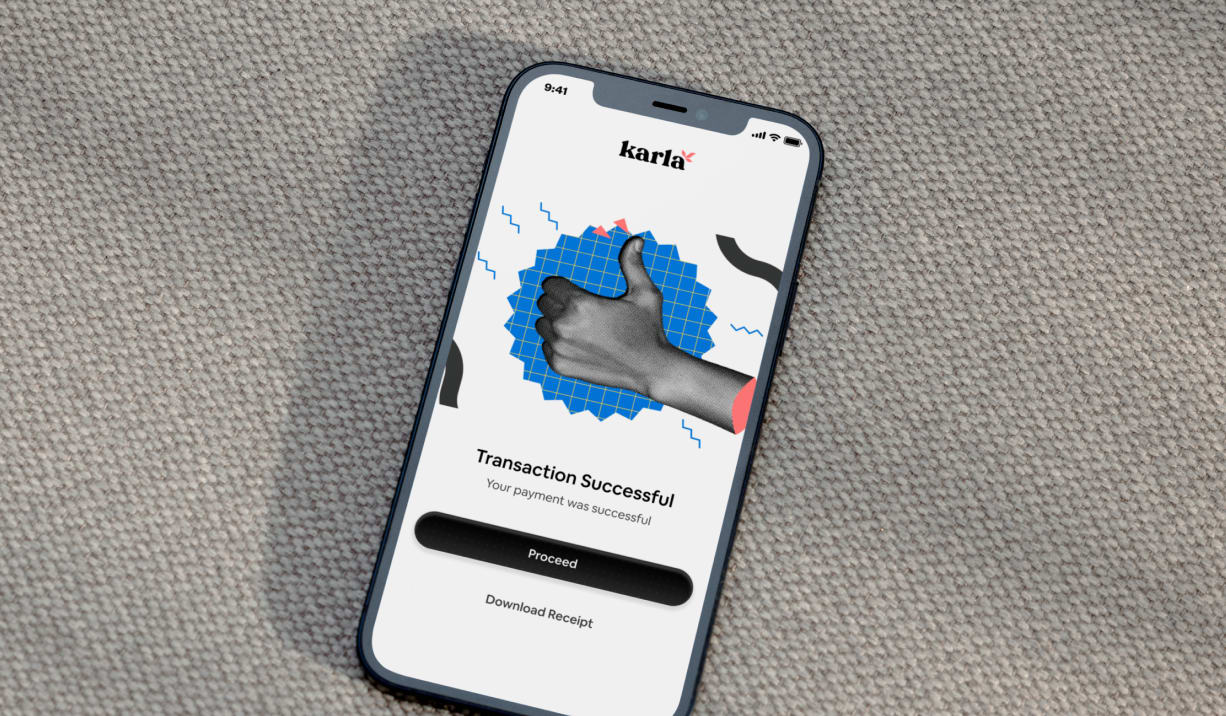
The tap-to-pay interaction needed to communicate three things clearly:
when the phone is ready
when payment is processing
when payment is successful
Small delays or unclear feedback can cause users to repeat transactions or lose trust in the system.
We introduced:
strong visual confirmation states
haptic feedback signals
simplified microcopy
clear transaction summaries
Users immediately understood when a transaction was successful.
Feedback from testing included:
“The green tick helps me know the payment worked right away.”
“I didn’t know my phone could do this.”
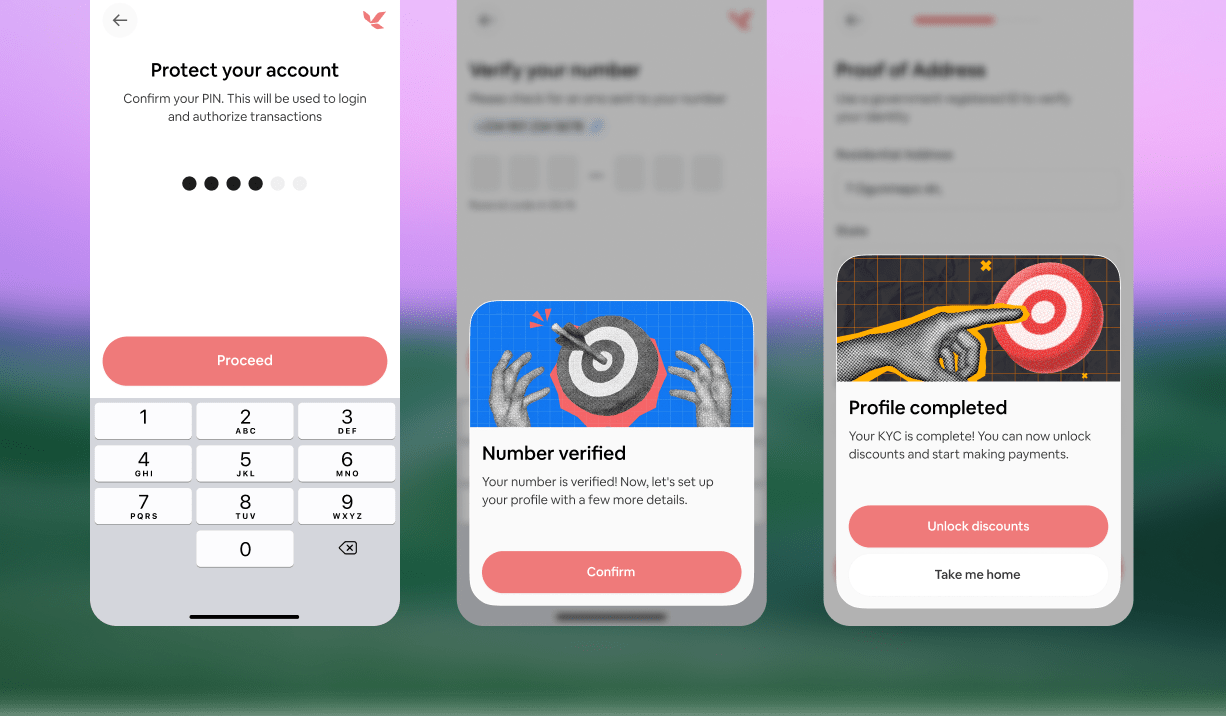
I used the Double Diamond framework to structure the product exploration and iteration cycle.
Discover
Conducted interviews with merchants and customers to identify friction in onboarding, trust, and hardware dependency.
Define
Key insights:
merchants needed confidence in transaction success
Onboarding complexity discouraged adoption
Hardware cost created friction for small businesses
unreliable internet requires offline-first thinking
Develop
Explored interaction patterns for tap-to-pay and QR payments.
Tested variations of:
onboarding flows
transaction confirmation states
visual feedback hierarchy
navigation structures
Deliver
Collaborated closely with engineering to ensure NFC flows worked consistently across devices.
Weekly critiques ensured alignment between product, engineering, and business teams.
Iterated onboarding multiple times to improve completion rates.
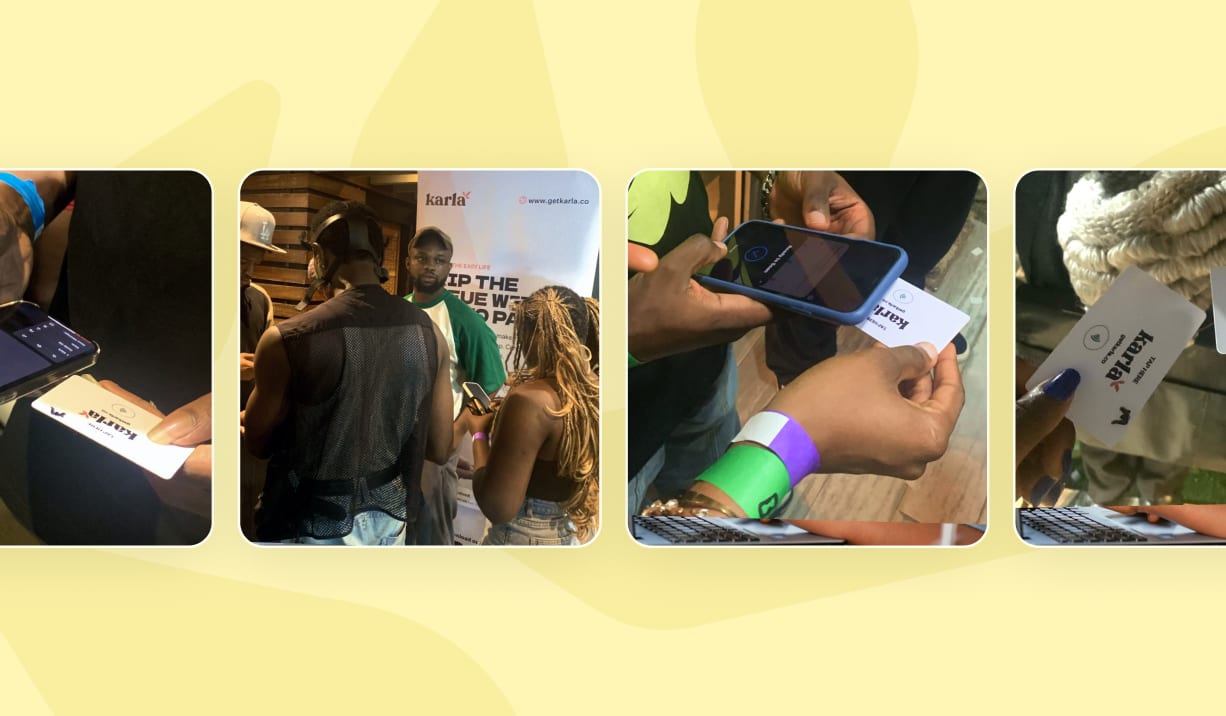
Within 90 days of launch, Karla demonstrated strong early traction:
200+ daily active users across iOS and Android
$20,000+ transaction volume
40% month-over-month user growth
$3,000 monthly recurring revenue through partnerships
10+ merchant partnerships onboarded
$50,000 marketing grant secured through product positioning
The product helped demonstrate that contactless payments can be viable without dedicated POS hardware.
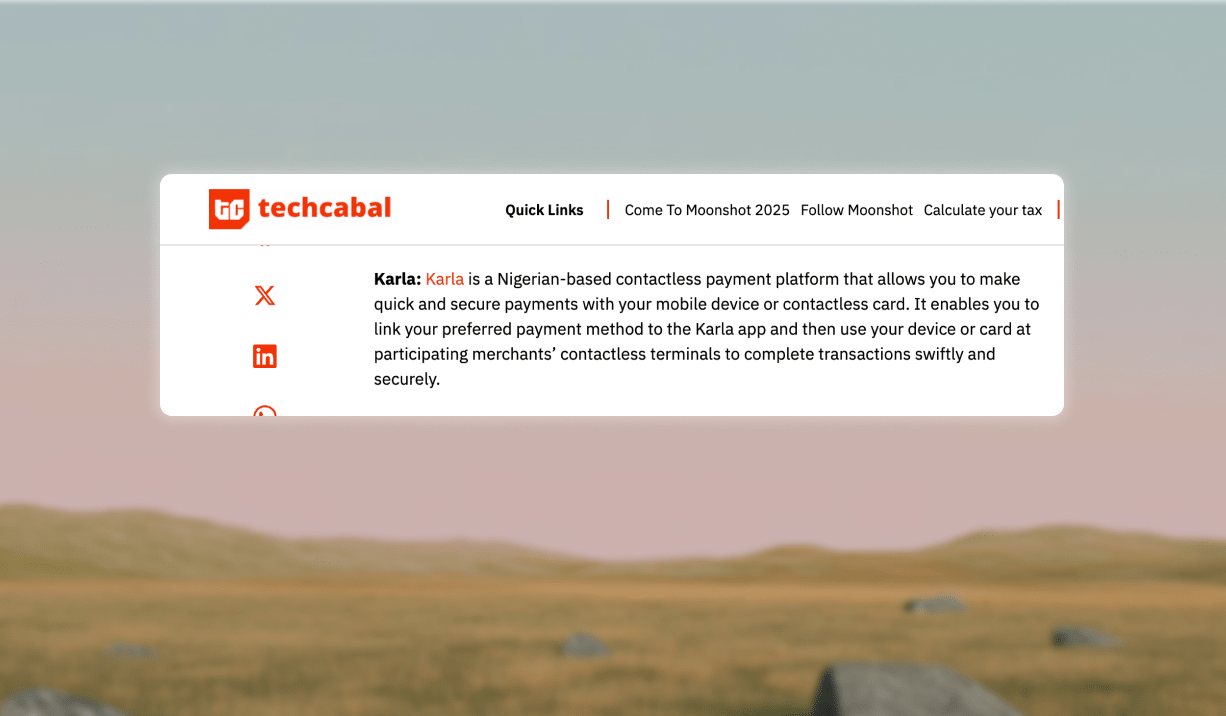
Karla was also recognised as one of TechCabal’s fintech companies to watch.
Beyond UI delivery, the work influenced broader product direction:
strengthened the positioning of Karla as an infrastructure for contactless payments
improved investor understanding of the product’s scalability
helped define long-term platform capabilities
enabled faster iteration through reusable design patterns
Leadership highlighted the role of design in clarifying the value proposition for both merchants and partners.
Designing Karla meant solving for more than usability; it required building confidence in a new payment behavior.
Because contactless transactions are invisible, users rely heavily on feedback to know what’s happening.
Trust became something we actively designed for.
Clear confirmations, responsive feedback, and simple language helped reduce uncertainty and made the experience feel reliable from the first transaction.